
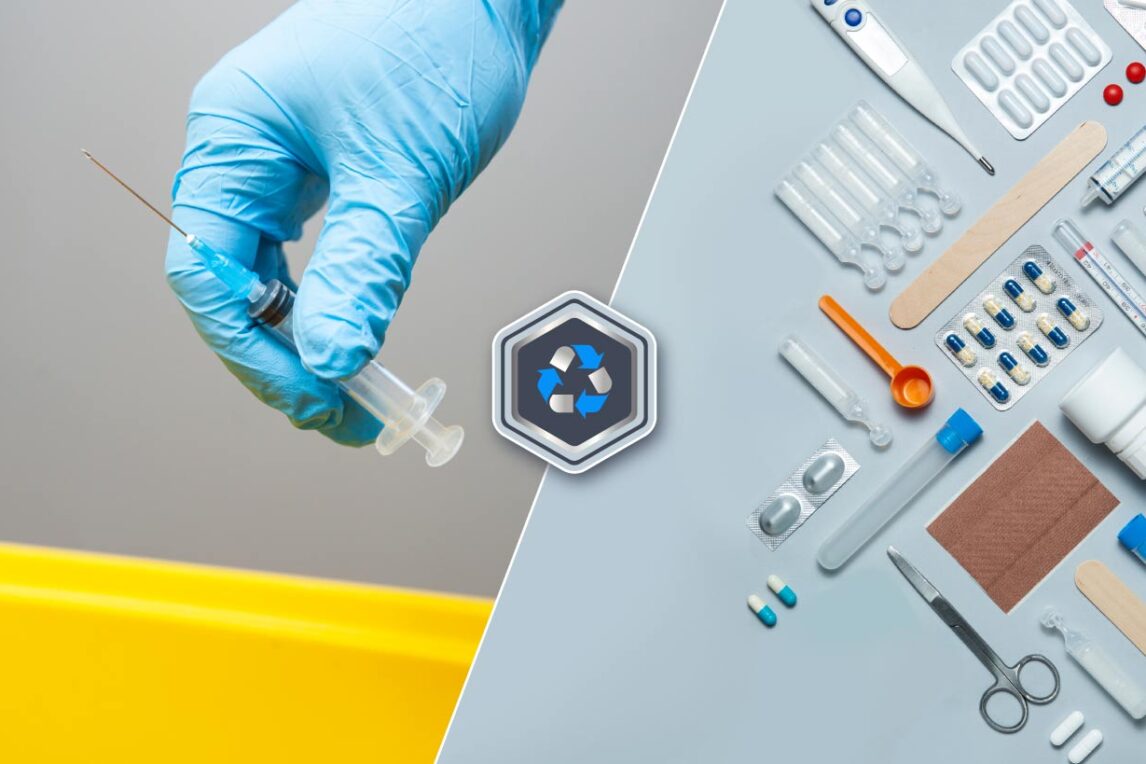
Medical waste is a big deal in the United States. The healthcare field is the second largest industry creating landfill waste, and needs to take extra precautions to safely manage hazardous materials. Understanding medical waste helps paint a clearer picture of the healthcare industry at large.
Healthcare facilities produce around 6,600 metric tons of waste each day, which adds up to 2-5 millions tons of waste each year. The medical industry also creates substantial carbon emissions, with rhinoplasties in the United States producing roughly 6 million kilograms of carbon dioxide in 2020 alone.
Due to the hazardous nature of some medical waste, certain materials need to be handled differently. There are five main categories of medical waste: regular trash, common medical trash, trace chemotherapy waste, pathological waste and pharmaceutical waste. Hazardous substances, which may be toxic, infectious or radioactive, make up 15% of all medical waste.
Depending on its nature, medical waste will either end up in a landfill or a waste-to-energy facility. (WTE). In a WTE, waste is either processed with steam autoclave or incineration.
Prioritizing efficiency and safety is vital when it comes to medical waste. In fact, a more efficient waste disposal system can lower healthcare, energy costs and hazards. Continuing to be thoughtful and efficient when processing medical waste will be important moving forward.

Source: Amergy Disposal