

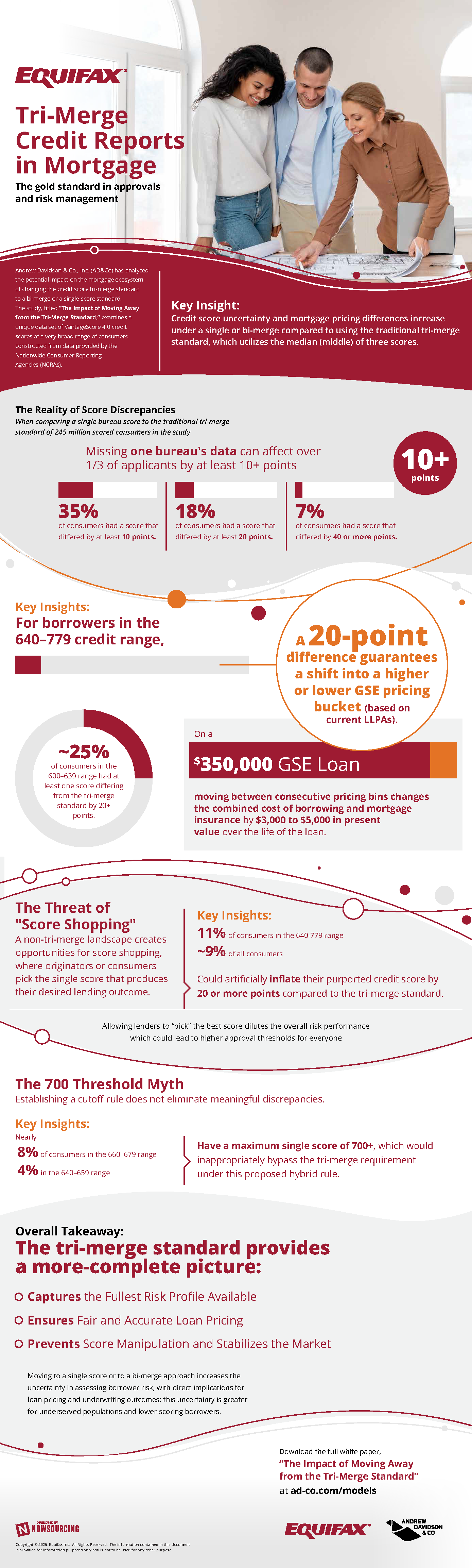
Traditionally, mortgage lenders have looked for the middle score within three credit scores to find a borrower’s more accurate credit score. This is called the tri-merge standard credit score and has been the method that lenders have used; however, there have been recent proposals to use a one or bi-merge standard credit score instead. This, on the surface, may seem like an easier option and one that could allow for more options to borrowers, but upon further investigation, there are some hidden pitfalls to the new approach. When borrowers are allowed to “shop” for their credit score, they often end up choosing the score that gives them the more favorable outcome. This makes sense after all, borrowers want to save as much money on interest as possible, but this actually creates negative results. When lenders can simply “pick” the best score, the overall risk performance becomes diluted, and that ends up leading to higher approval thresholds for everyone. This means that “score shopping” could artificially inflate a purported credit score by 20+ points. The tri-merge standard prevents this from happening while still keeping borrowers at their medium best score. In the end, the question remains, why with something if it isn’t broke, and the standard for credit scores seems to fall perfectly in this equation.
Source: Equifax