
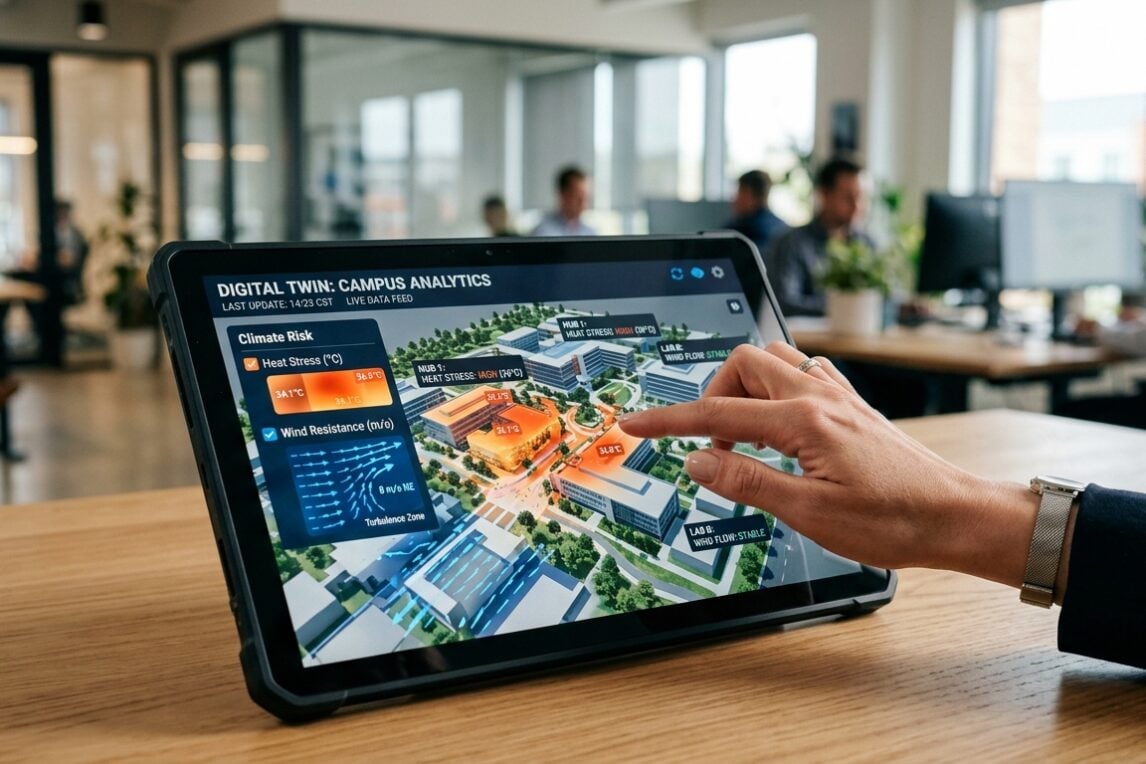
Climate data has never been more abundant. Satellite observation, downscaled climate models, and hazard datasets covering flood, heat, wind, wildfire, and drought are more accessible now than at any point before. None of that abundance solves a business problem by itself, because a terabyte of hazard projections is not an answer to the question a chief financial officer is actually asking, which is closer to what does this cost us and when.
Climate risk analytics is the layer that sits between the raw data and that question, and it is where most of the real work of a climate risk programme actually happens.
From Hazard Layers to a Single Number
Raw hazard data typically arrives as separate layers, one for flood probability, one for heat days, one for wildfire likelihood, each on its own scale and time horizon. Analytics work is what combines these into a single, comparable measure of exposure for a given asset, adjusted for the local adaptation infrastructure already reducing that exposure in practice. Without this step, comparing a coastal warehouse to an inland office tower means comparing numbers that are not actually on the same scale.
Financial Translation Is the Differentiator
The step that separates analytics that gets used from analytics that gets filed away is financial translation, converting a hazard score into a change in expected cashflow, insurance premium, or asset valuation. AlphaGeo’s Climate Price tool is built around exactly this translation, giving corporates and investors a quantified, traceable risk figure rather than a colour-coded exposure map that still requires someone to interpret it before a decision can be made.
Analytics at Portfolio Scale
A single-asset assessment is manageable by hand. A portfolio of several hundred or several thousand assets is not, which is where analytics platforms earn their value over manual analysis: screening an entire book against updated hazard and adaptation data in the time it would take to manually review a handful of properties, and surfacing the handful of assets that actually need closer attention rather than treating every holding as equally urgent.
Organisations that have accumulated plenty of climate data but not enough usable insight from it can look at how climate risk analytics from AlphaGeo compresses hazard, adaptation, and financial data into a single quantified risk figure that a finance or investment team can act on directly.
Organisations that have accumulated plenty of climate data but not enough usable insight from it can look at how climate risk analytics from AlphaGeo compresses hazard, adaptation, and financial data into a single quantified risk figure that a finance or investment team can act on directly.
As climate reporting expectations continue to evolve, organisations are under greater pressure to support decisions with measurable evidence rather than assumptions. Reliable analytics create a consistent framework for evaluating assets across different regions, helping businesses understand where risk is increasing, where resilience investments are delivering value, and which locations require additional planning. This consistency is particularly valuable for companies operating across multiple markets with varying climate conditions.
Another advantage of advanced climate risk analytics is the ability to update assessments as new information becomes available. Climate projections, infrastructure improvements, and historical event data are continually refined, meaning risk profiles should not remain static. Modern analytics platforms can incorporate these updates efficiently, allowing decision-makers to monitor changing exposure without rebuilding assessments from scratch. This creates a more responsive approach to long-term risk management.
Ultimately, climate risk analytics enables organisations to move beyond descriptive climate information and toward practical business intelligence. By combining scientific datasets with financial context, companies gain clearer visibility into potential impacts on operations, investments, and future growth. Instead of reacting after climate events occur, businesses can make informed, forward-looking decisions that strengthen resilience while supporting strategic planning and capital allocation.