
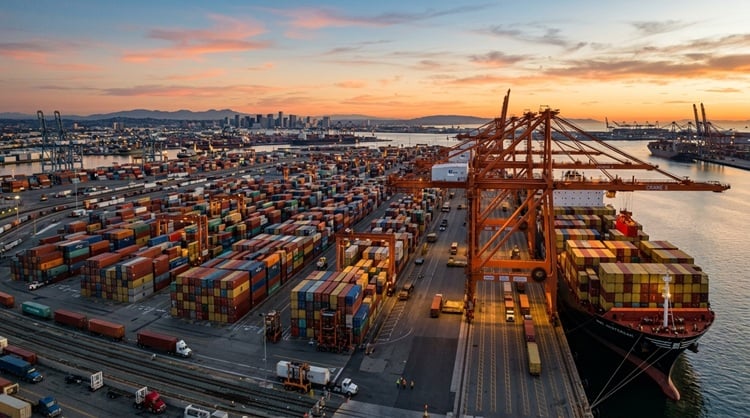
ISO container standards are what make the global shipping system work. A container manufactured in China, loaded at Singapore’s Tanjong Pagar terminal, shipped to Rotterdam, and trucked to a distribution centre in Germany moves through each of those stages without a single measurement being confirmed because the dimensions, corner casting positions, and structural specifications are identical at every point in the chain. That standardisation is not an administrative detail – it is the engineering foundation that allows Singapore, as one of the world’s busiest transshipment hubs, to process millions of container movements each year with clockwork efficiency.
What ISO Certification Means for a Container
ISO containers meet the specifications set by the International Organization for Standardization under the ISO 668 series, which governs dimensions, and ISO 1496, which governs construction and testing requirements. A container certified to these standards has been tested for stacking loads, typically a minimum of 192 tonnes distributed across the four corner castings – racking resistance, weatherproofing, and door seal integrity.
For buyers, ISO certification means the container can be handled by standard spreader bars and crane equipment at any port or logistics facility in the world. It can be stacked safely using standard interbox connectors. It can be loaded onto a chassis, a flat-rack railcar, or a vessel using equipment that does not require any special configuration. This interoperability is the value that ISO certification delivers.
ISO containers come in the standard sizes that dominate the global fleet: 20-foot and 40-foot units in standard height and high-cube variants. Each dimension is specified in the ISO standard to the millimetre, and any container claiming ISO certification that deviates from these dimensions is not genuinely certified.
Standard versus Specialised ISO Container Types
The standard dry container handles the majority of global freight. Its corrugated steel walls, wooden floor, and door-end opening suit palletised goods, bulk cargo in bags or cartons, and a range of other dry freight types. It is the unit most commonly available in Singapore’s secondary market.
Beyond the standard dry unit, the ISO family includes specialised variants that address specific cargo requirements.
Refrigerated containers, or reefers, maintain controlled temperatures for perishable cargo. They carry their own refrigeration unit and are connected to power on the vessel or at the terminal.
Open-top containers have a removable canvas or steel roof, allowing cargo loaded from above by crane, machinery, large equipment, or oversized goods. They accept abnormal loads that cannot enter through a standard end door.
Flat-rack containers have collapsible end walls and no side walls, providing a platform for heavy or oversized cargo that needs lashing rather than enclosure.
For buyers seeking standard ISO container solutions for storage, site office conversion, or freight use, the standard dry unit in 20-foot or 40-foot configuration covers the majority of applications.
ISO Containers in Singapore’s Logistics Ecosystem
Singapore’s position as a global transshipment hub means that a large stock of ISO-certified containers passes through the country continuously. This creates an active secondary market for used containers from the major international shipping lines, available at prices that reflect their service history and current condition while retaining the structural integrity that ISO certification guarantees.
The Maritime and Port Authority of Singapore oversees container logistics at the national level. Buyers and logistics operators can reference MPA Singapore’s container trade and port standards for context on how containers are managed within Singapore’s port infrastructure.
As Senior Minister Tharman Shanmugaratnam has noted about Singapore’s trade position, “Our connectivity is our competitive advantage, and maintaining its standards is a national priority.” ISO container standards are part of what sustains that connectivity.
Choosing the Right ISO Container
For buyers selecting an ISO container for a specific application, the decision should account for the intended use, the required service life, and any special requirements for the placement site or the cargo being stored.
Storage and site applications generally suit used cargo-worthy or wind-and-watertight units, which offer structural reliability at a lower price point than new units. Freight use and conversion projects where the container will be in visible, long-term service generally warrant a higher-grade unit.
Confirming that the unit is genuinely ISO-certified rather than a locally fabricated container that approximates the dimensions matters for any application where the container may need to be transported by standard handling equipment. Non-standard containers that look like ISO units but were not built to the specification can fail under the loads that standard equipment assumes.
For businesses and individuals across Singapore requiring ISO container solutions for storage, logistics, or conversion, sourcing from a supplier who can certify the specification of each unit provides the assurance that applications demanding genuine ISO compliance require.