Entrepreneurship
Teaching a Teenager Basic Car Care Before the First Solo Drive
By Bill
November 12, 2026
Field Notes
Many young drivers arrive at their first solo trip knowing how to steer but not how to tell whether the car is ready for the road. A parent, grandparent, or trusted relative can close that gap with patient, hands-on lessons held in a driveway or a quiet parking lot. The goal is not to turn a teenager into a mechanic. The goal is to build a steady habit of noticing things early, so that small problems do not become roadside emergencies. This guide walks through a simple approach that keeps the lessons calm, practical, and easy to repeat from one month to the next.
Why it matters
A car gives little warning before it becomes unsafe. Tires lose pressure slowly, fluids drop quietly, and lights fail without any fuss. A young driver who understands these basics is far less likely to be surprised by a warning light or a soft steering wheel. Knowledge also builds confidence. A teenager who can check a tire or top up the washer bottle feels more in control on the road, and that sense of control tends to make decisions calmer and less rushed when traffic becomes busy.
It also helps to explain that good habits protect more than the car itself. Regular checks reduce the chance of a breakdown in bad weather or late at night, and they teach patience along the way. Car care is a small, repeatable routine rather than a single rescue. When a teenager sees that routine as part of being responsible, the lessons stick much longer than any list of rules read aloud at the kitchen table.
Checking the essentials together
Start with the basics in a safe place, with the engine off, the handbrake on, and the car on level ground. Walk around the vehicle together and look at each tire. Check the tread with a simple coin test and look for bulges, cracks, or nails. Ask your teenager to find the recommended pressure, which is usually printed on a sticker inside the driver’s door or in the owner’s handbook, and then to check each tire with a reliable gauge, including the spare if the car has one.
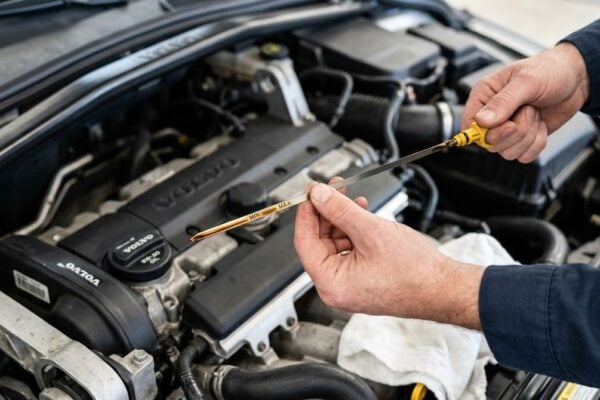
Next, open the hood together and locate the main fluids. Show where the engine oil dipstick sits, how to read its marks, and what the coolant reservoir looks like. Explain that most fluids should be checked only when the engine is cool, unless the handbook says otherwise. Walk through the washer fluid bottle as well, because clear windshields matter in low sunlight and in rain. Encourage the teenager to say aloud what each check is for, since talking through the reason makes each step easier to remember later.
- Tire pressure and tread depth
- Engine oil and coolant levels
- Washer fluid and wiper blade condition
- All exterior lights and indicators
- Dashboard warning lights when the engine starts
Finish with the lights. Ask a helper to stand outside the car while you test the headlights, brake lights, indicators, and reversing lights. A quick check each week takes only a few minutes and catches faults that are easy to miss from the driver’s seat. Readers may also want to visit Frontsiderocks.com.
Building the habit of looking
A healthy habit is worth more than any single lesson. Suggest a short weekly routine on the same day each week, perhaps before the first journey of the morning. Keep a simple notebook or a note on a phone where the teenager records what was checked and any concern that came up. Over time the notebook reveals patterns, such as a tire that loses pressure every few weeks, which may point to a slow puncture that needs a professional look.
Encourage the young driver to notice changes that happen during driving. A new vibration, a pull to one side, a smell of hot oil, or a noise that appears only when turning are all clues worth remembering. Explain that noticing is not the same as fixing. The right response is usually to note the symptom, mention it to a parent, and arrange a check. You can also visit provedorcrescenet.com for more reading.
Keep the car’s paperwork in one shared place, including service records, tire sizes, and the handbook. For a related read on this site, see How to Build a Calm Routine for Managing Digital Information. A tidy file means that the next driver, whether a sibling or a future owner, starts with clear information. Review the routine together every few months and adjust it as confidence grows. Remember that rules for licenses, insurance, and vehicle inspections differ by region, so check local requirements with the relevant authority or a qualified advisor before making decisions about them.
Knowing when to call a professional
Some jobs belong to a qualified technician. Brakes, steering, suspension, airbags, and any warning light that stays on should be inspected by a professional rather than guessed at during a home session. Teach the teenager that asking for help shows good judgment rather than failure. A simple rule works well in practice: if a fault affects braking, steering, or visibility, stop driving and arrange a check before continuing the journey.