Entrepreneurship
How to Practise Map Skills Through Familiar Local Errands
By Bill
November 8, 2026
Field Notes
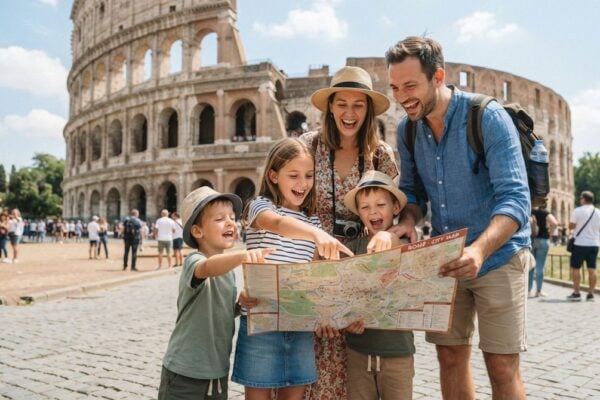
Local errands provide a real reason to read routes, estimate direction, notice landmarks, and revise a plan. Family learning is easier to sustain when it feels like part of ordinary life rather than an extra course imposed on everyone. The purpose of building map skills through familiar local errands is to create a small structure for curiosity, practice, and conversation while leaving room for different ages, interests, and energy levels.
Begin with one learning intention. It might be asking better questions, explaining an idea, noticing evidence, planning independently, or reflecting on a mistake. Readers may also want to visit farmhousefoodsco.com.
Make participation predictable and low-pressure. Explain what will happen, how long the activity will roughly take, and what counts as finished. Offer meaningful choices within those boundaries. A young person is more likely to engage when the task has a clear shape and some room for ownership.
Set up the activity with a clear purpose
Choose a familiar, safe journey and one map skill suited to the learner, such as orientation, symbols, scale, or route comparison. Gather only the materials needed for the first step and place them where everyone can reach them. Too many supplies or instructions can make a simple idea feel like a test. If the activity involves several ages, keep the shared topic but vary the expected response.
Invite people to contribute what they already know, including uncertain ideas. This gives adults a better sense of where to begin and shows that revision is part of learning. Avoid correcting every detail immediately; first ask how the learner reached the idea and what might help check it.
You can also visit The Candid RD for more reading. Translate that material into plain questions instead of delivering a long explanation. The adult’s role is to provide boundaries, model thinking, and help locate evidence, not to perform the interesting part on the learner’s behalf.
Follow a short, flexible sequence
Preview the route, let the learner make one decision, and compare the map with what appears on the ground. Keep the sequence visible, especially for learners who find transitions difficult. A written card, simple sketch, or spoken preview can reduce repeated reminders and help teenagers take more responsibility for the next step.
Try this flexible activity checklist:
- Locate the start and destination
- Identify two useful landmarks
- Predict a turn or direction
- Notice where the map simplifies reality
- Review the route after returning home
Ask questions that open thinking rather than hunt for one expected sentence. Useful prompts include “What makes you think that?â€, “What changed?â€, “What would you try next?â€, and “Where could we check?†Give enough waiting time for an answer, and accept drawing, demonstrating, or listing as alternatives to a polished spoken response.
If frustration rises, reduce the size of the next step without taking over. You might cover part of a page, provide two starting choices, read instructions together, or model one example and then stop. A calm pause can protect the relationship and make later independence more likely.
Connect learning to real family life
Use walking, transit, or car journeys where an adult can supervise without creating distraction or safety concerns. Real contexts give ideas a reason to matter. Maps can support an errand, measurement can support a household project, discussion can help choose a shared activity, and source checking can clarify a claim heard in conversation. The task should remain genuine rather than becoming a disguised worksheet.
For a related read on this site, see A Home Pattern Hunt Using Textiles, Tiles, and Everyday Objects. Then bring attention back to the learner’s own observations. External material is most useful when it sparks investigation, not when it supplies every conclusion before the activity begins.
A younger child may match symbols to places, while a teen can compare two routes and explain the trade-offs. Let family members take different roles when appropriate: reader, recorder, materials helper, timekeeper, questioner, or summarizer. Rotate roles over time so confidence is not mistaken for fixed ability and one person does not become the permanent expert.
Close with reflection and an easy next step
Ask which information helped, what was missing, and how the chosen route might change under different conditions. End while there is still enough attention for a brief reflection. Ask what felt interesting, confusing, surprising, or worth trying again. Adults can share their own uncertainty too, which shows that learning is not a performance reserved for children.
Save only what will be useful: a photo of a model, a question for later, a few notes, or the place to restart. Avoid turning every activity into a display or assessment. Sometimes a good conversation and a new question are sufficient evidence that the time mattered.
Real navigation practice works best when safety and the purpose of the errand remain primary. If a learner consistently struggles, becomes distressed, or needs support beyond the family’s experience, speak with an appropriate teacher or qualified professional. A repeatable family routine should support formal learning and family connection, not replace specialist help when it is needed.